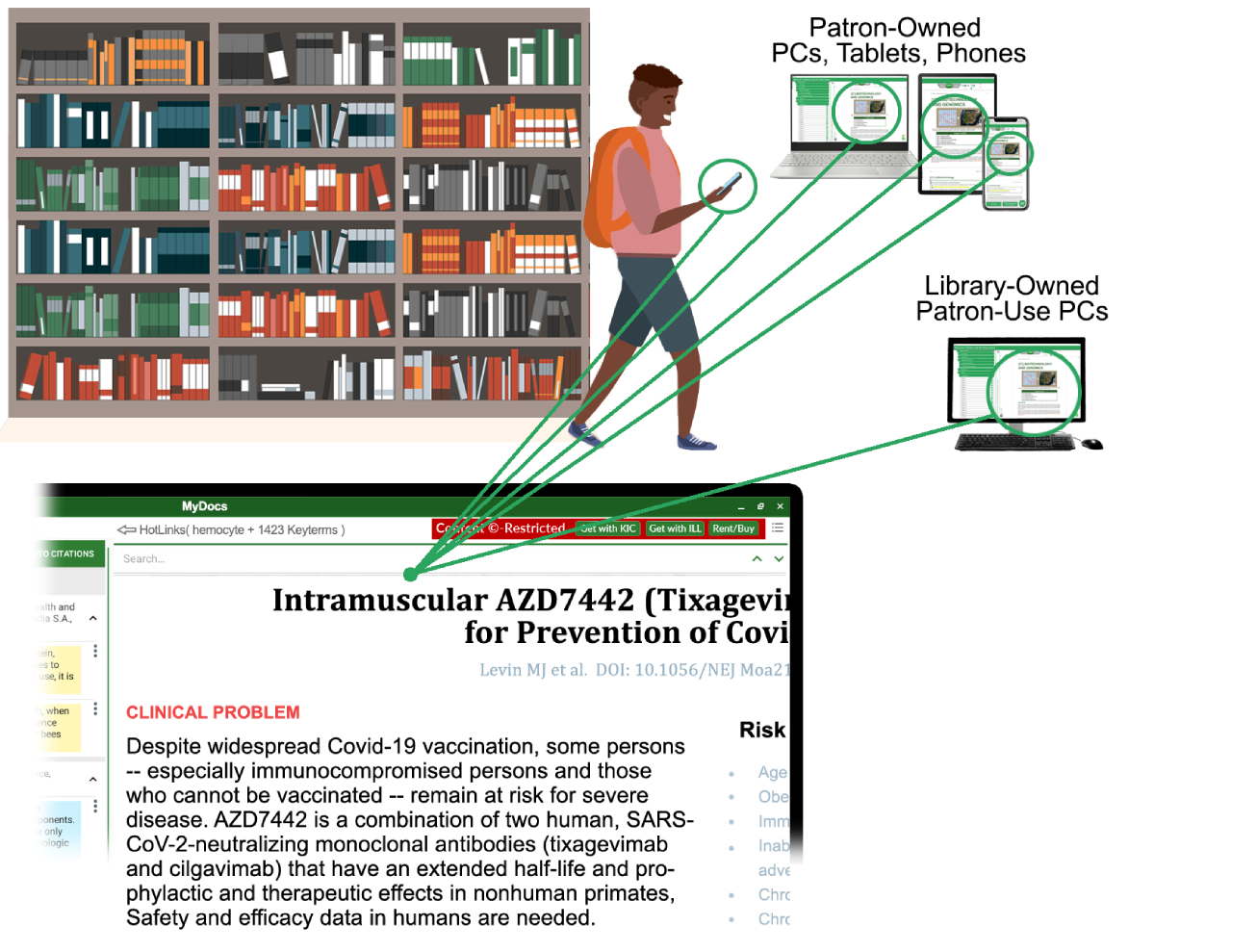
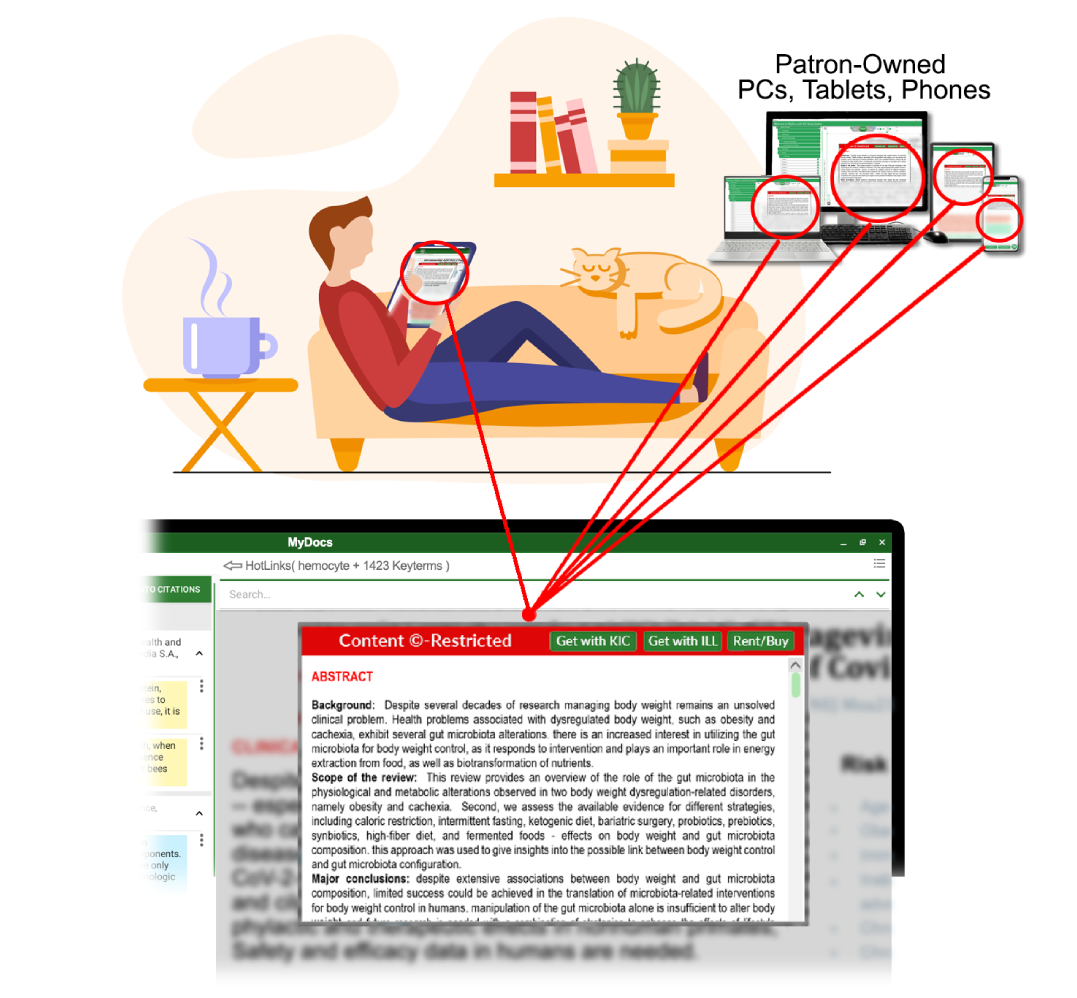
HotLinks 2D Full-Text SearchMATCH Discovery
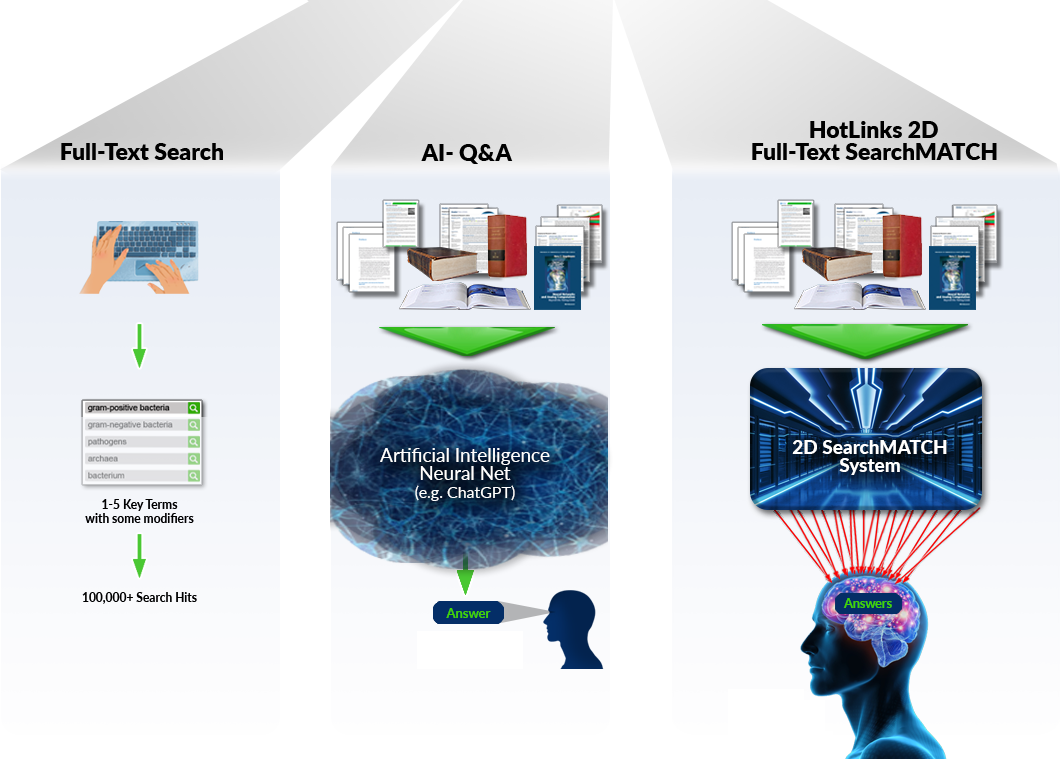
Artificial Intelligence is certainly valuable for research, but it has some fundamental
flaws, like persistent hallucinations
and lots of ‘blind spots’ that can stubbornly steer researchers away from what they must
explore. HotLinks 2D Full-text
SearchMATCH doesn’t draw conclusions, doesn’t steer, doesn’t hallucinate and doesn’t have
blind spots.
Discovery Technologies Comparison
| Discovery Technologies Comparison Chart |
Full-Text Search |
Artificial Intelligence |
HotLinks 2D SearchMATCH |
|
Support for simple key term search/discovery
|
YES
|
YES
|
YES
|
|
Input of 100+ pages (beyond simple key terms)
|
NO
|
YES
|
YES
|
|
Correlation 100+ pages of input with billions of pages of scholarly research
|
NO
|
YES
|
YES
|
|
Instant access to subscription-based content (when on-campus)
|
NO*
|
N/A
|
YES
|
|
Deterministic algorithms that do not obscure findings from researchers and
instead,
allow
researchers to draw their own conclusions
|
YES
|
NO
|
YES
|
|
Publisher-power agnostic (does not increase dependency on publishers)
|
NO
|
Unknown
|
YES
|
|
Integrated with Personal Digital Mind Palace
|
NO
|
NO
|
YES
|
* some full-text search systems provide a programmatic interface (an API) for accessing the
content
StudentResearcher
Receives Answer
StudentResearcher
Derives his/her
Own Conclusions
from
Hot Links
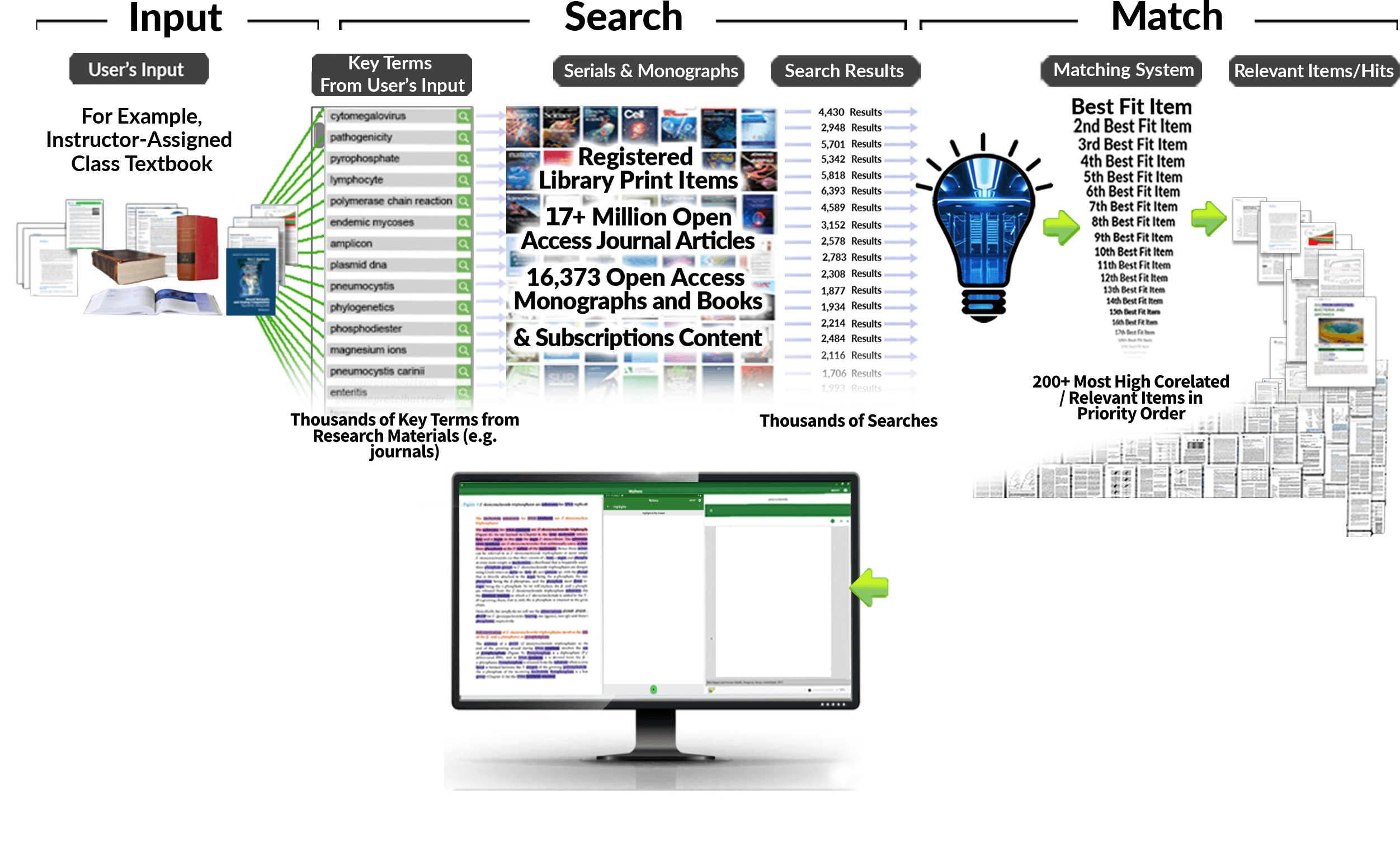
Inside HotLinks 2D Full-text SearchMATCH Discovery System
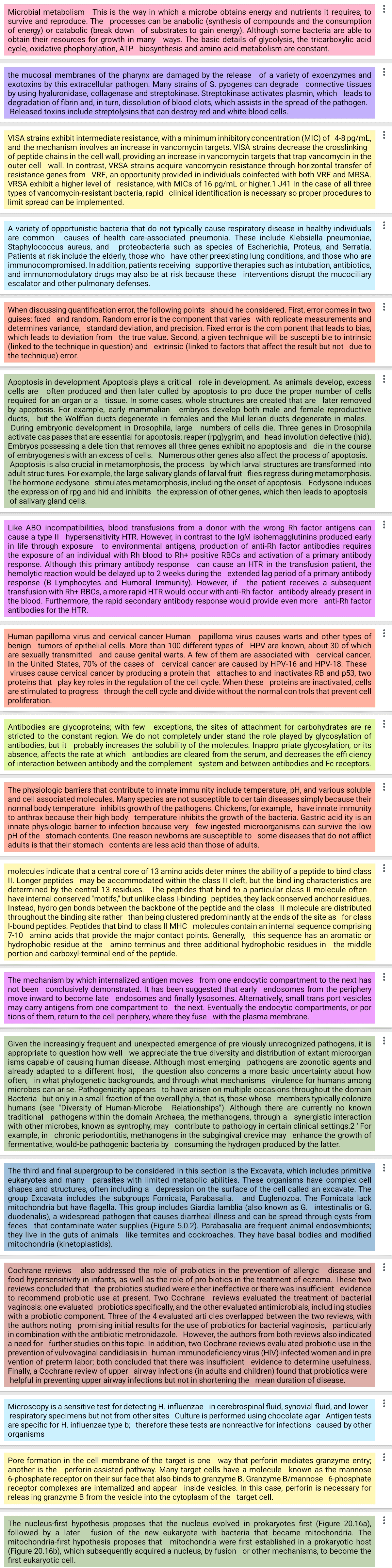
HotLinks extracts thousands of key terms from the input material, including textbook chapters, course materials,research papers, journal
articles, monograph excerpts, etc., and performs a search on
each of the thousands of key terms. The thousands of results for each of the thousands of
search
terms
are then fed into the HotLinks matching system, which finds the best matches with the input
material
and
sorts those matches by relevance to the source materials. The diagram below illustrates the
process.
Personal Digital Mind Palace
It is quite common for scientists to have accumulated hundreds to thousands of journal
articles that are relevant to their current research. However, it is not so common for
researchers to be able to recall the content of their relevant articles so well that they
don’t need to reference them repeatedly. An effective digital system to facilitate fast and
easy navigation between a thousand articles is needed.
Digital technologies should be able to assist researchers with recalling the correct article
as well as remembering which article to recall. When a researcher wishes to recall some
particular information, it can be difficult to remember which article contains the
information. Also, locating, loading and checking file after file can be very tedious.
A good first step might be to distill the five to 50+ pages of each relevant article into
one or a few short excerpts. Abstracts can be a bit long, but more important, they often
inadequately represent the reasons the articles are deemed relevant.
HotLinks SearchMATCH discovery is not only excellent at finding relevant articles, but it
also allows the user to highlight the specific excerpts that represent the article’s
relevancy to the user. HotLinks stores copies of the highlights in a list along with a link
from each highlight to its source article. Together, these features should be necessary and
sufficient to allow researchers to quickly and easily navigate between relevant articles,
but for one thing: the overwhelming number of relevant articles that researchers typically
find to be relevant.
In order for researchers to be able to quickly and easily navigate between relevant articles
when the number of relevant articles exceeds one or two hundred, the researchers’ memories
must be enhanced. The Mind Palace system built into HotLinks does just that. It relies upon
the human brain’s highly developed ability to navigate visually. For more information on
this phenomenon of the human brain, click here or lookup
Simonides ‘method of loci,’ which
is often called ‘Mind Palace’
HotLinks Mind Palace allows the user to easily build and name ‘rooms,’ organize the rooms
into a ‘palace floorplan’ and fill the rooms with highlights. Navigating this floorplan can
be very quick, especially if the floorplan makes sense to the user. Due to the brain’s
excellent spatial memory, each time it is used, the Mind Palace becomes more and more
familiar. Eventually, articles can be recalled in 10 seconds or less, saving a lot of time
and perhaps more important, eliminating loss of train-of-thought, which is especially
important while collaborating with colleagues.
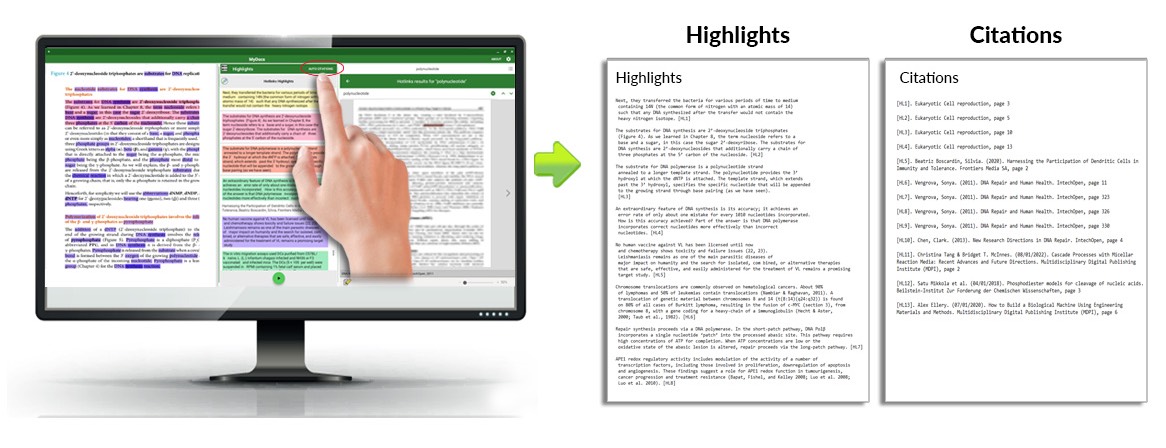
Create Auto-Citations





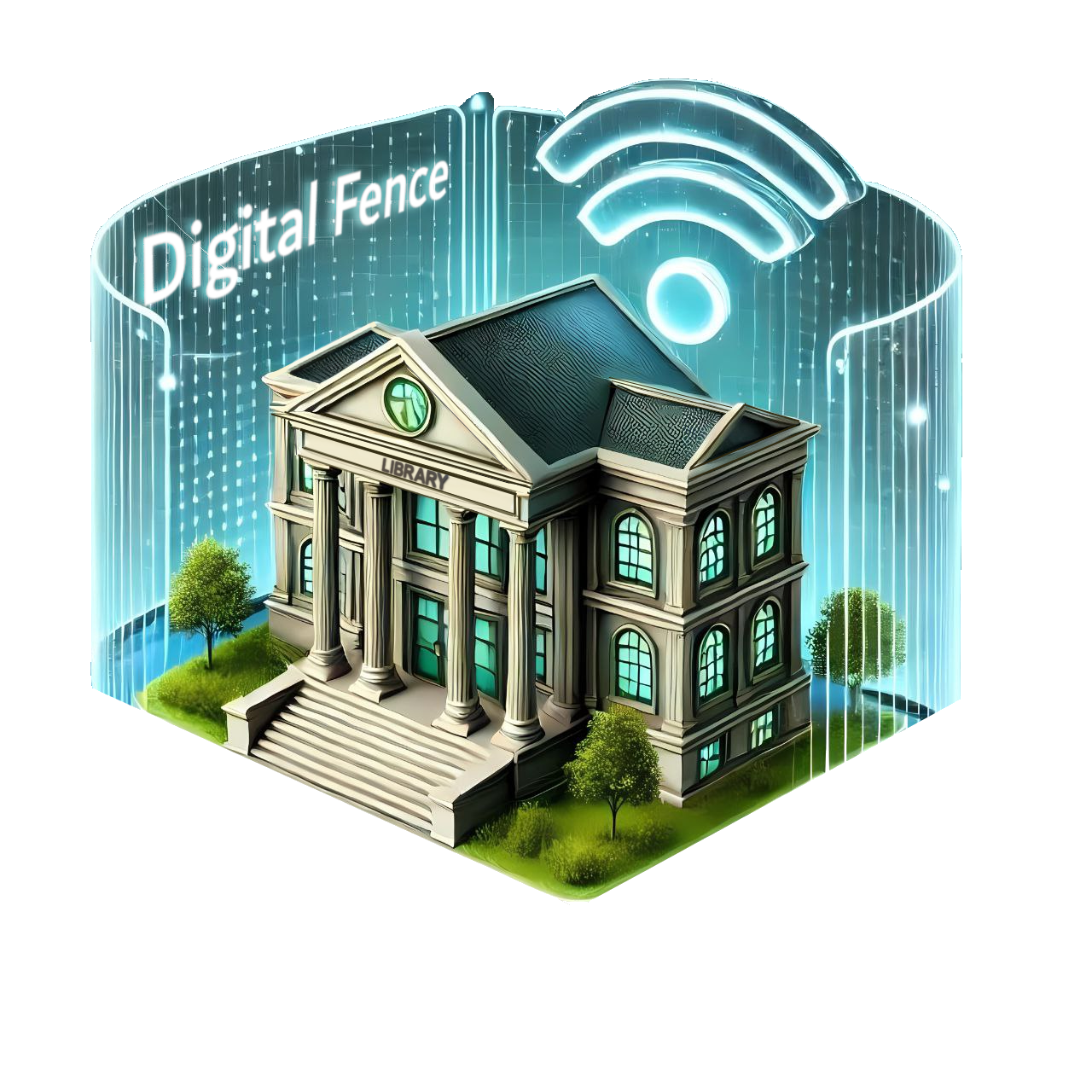
 While in the Library, All Copyrighted
  When Outside the Library, Copyright-controlled